We supply conventional Rice and residue free Rice, both to export standard. This page explains the difference, what the laboratory report actually proves, and which one your market needs.
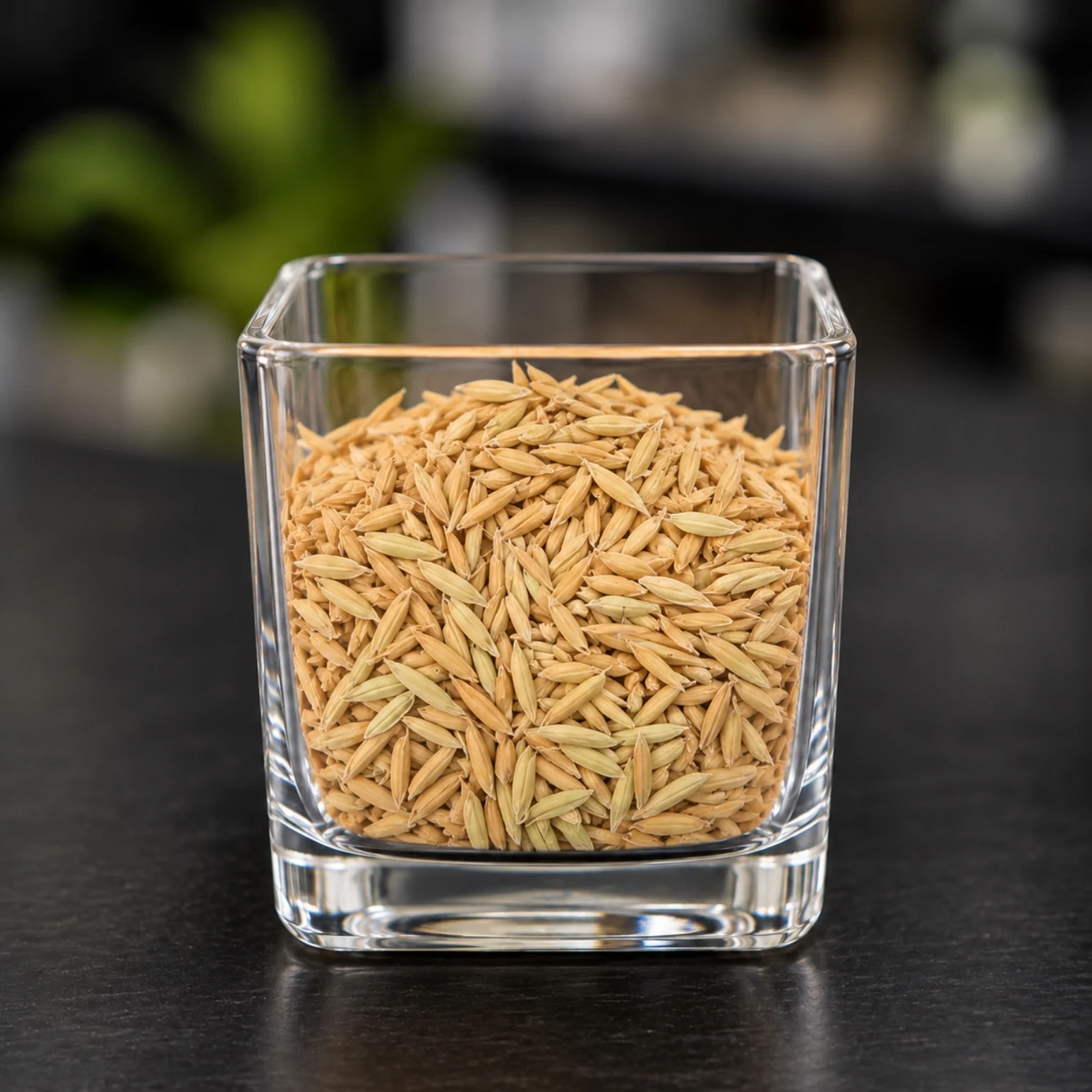
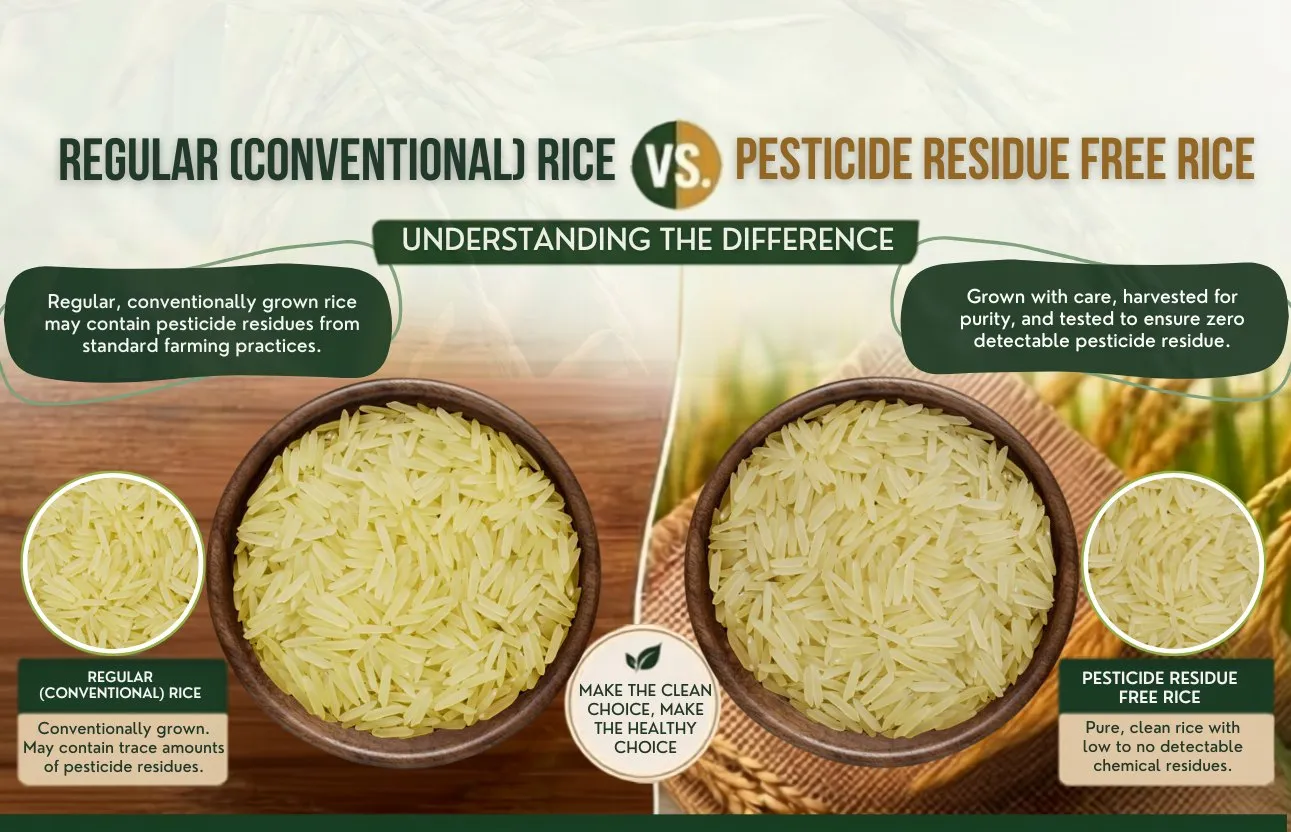
Pesticide residue free Rice is Rice grown under a controlled programme and tested in a laboratory before shipment, to confirm residues sit below the limit the buyer or the importing country sets.
It does not mean nothing was ever applied to the crop. It means the crop was managed to keep residues low and the finished Rice was measured to prove it. That distinction matters, because buyers who expect the first definition and receive the second lose trust in the supplier for no reason.
Both categories are safe and both are legal. Conventional Rice meets the Maximum Residue Limits of the importing country. Residue free Rice meets a tighter limit that a retailer, a brand or a food manufacturer has set for itself.
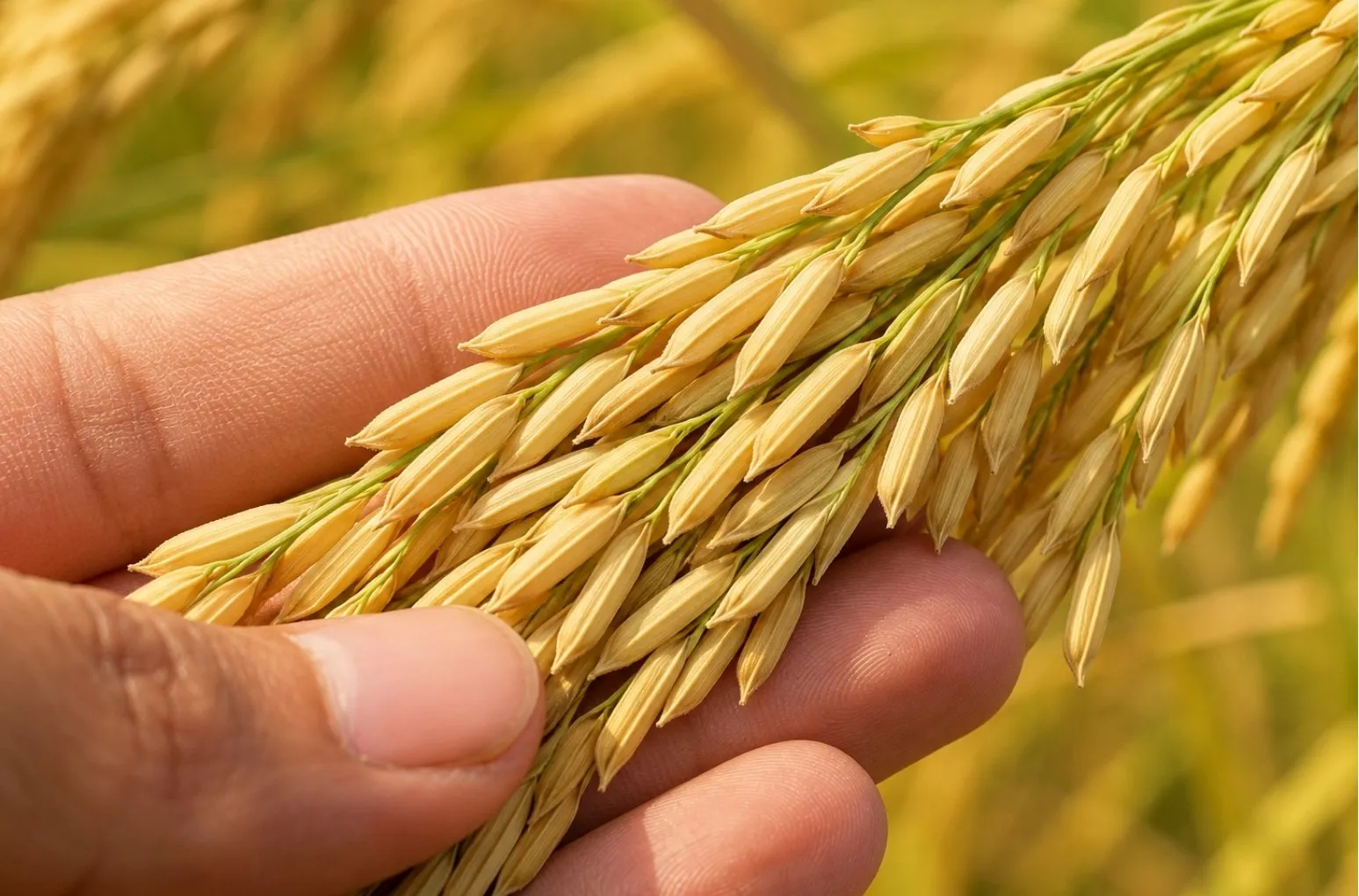
Field monitoring and controlled application keep residues below the limit your market sets, and the laboratory report on your lot proves it.
| Feature | Conventional Rice | Pesticide residue free Rice |
|---|---|---|
| Cultivation | Standard agricultural practice | Controlled programme with field monitoring |
| Crop protection | Applied as needed within the rules | Managed and minimised, only when necessary |
| Residue monitoring | Standard regulatory compliance | Intensive monitoring through the season |
| Laboratory analysis | On buyer request | Routine residue analysis before shipment |
| Food safety standard | Legal MRLs of the importing country | Tighter buyer specification |
| Traceability | Standard lot records | Enhanced tracking from field to container |
| Pricing | Competitive | Premium |
| Typical buyer | Importers and wholesalers | Premium retailers, food brands, infant food |
Both grades are available across our Basmati and Non-Basmati range. The residue report travels with the shipping documents.
Because their own customers are asking them. Supermarket groups, food manufacturers and infant food companies now hold suppliers to limits stricter than the law.
Lower residues give importers and consumers a straightforward answer when they are asked what is on the grain.
Premium supermarkets and food brands increasingly buy only from suppliers who can produce a residue report on request.
Many buyers specify limits below the legal MRL. Without testing you cannot quote for that contract at all.
A tested lot that clears on first submission is what turns a trial order into a standing programme.
Demand is strongest in Europe, the United Kingdom, the United States, Canada, Australia, Japan and South Korea.

Modern residue laboratories screen for hundreds of pesticide molecules at once using LC-MS/MS and GC-MS/MS. That is the analysis behind a residue report worth reading.
The report is what lets your compliance team verify a lot against European Union limits, your own residue specification, international food safety protocols and retail quality frameworks, without taking anyone at their word.
Maximum Residue Limits themselves are set by each importing market and by the Codex Alimentarius, which publishes the international reference values.
We arrange residue analysis through accredited laboratories and send the report with the shipping documents rather than weeks later, because a lot sitting at a port waiting for paperwork costs you more than the test.

The honest answer depends on who you sell to. We supply both, so we have no reason to push you either way.
Price and dependable supply lead your decision.
Your customer audits you as closely as you audit us.
The five questions buyers ask us most often about this programme.
Yes. Conventional Rice from a reputable exporter complies with food safety regulation and with the Maximum Residue Limits of the importing country. Residue free is a tighter specification, not a safety rescue.
Not necessarily. It means the finished Rice has been tested and verified against a strict residue specification. Crop protection may have been applied under control, within pre harvest intervals and good agricultural practice.
No. Organic is a certified farming system audited by an accredited body, and synthetic inputs are generally prohibited. Residue free is a measurement of the final product. They are different standards and are certified differently.
Extra field monitoring, keeping the crop segregated through storage and milling, laboratory testing, documentation and the quality assurance around all of it. The premium reflects work that actually happens.
Europe, the United Kingdom, the United States, Canada, Australia, Japan and South Korea, and increasingly any buyer supplying a major supermarket group.
Tell us the limit your market sets and the variety you need. We will quote both grades and let the report decide.