Welcome to Green International and GreenGroup
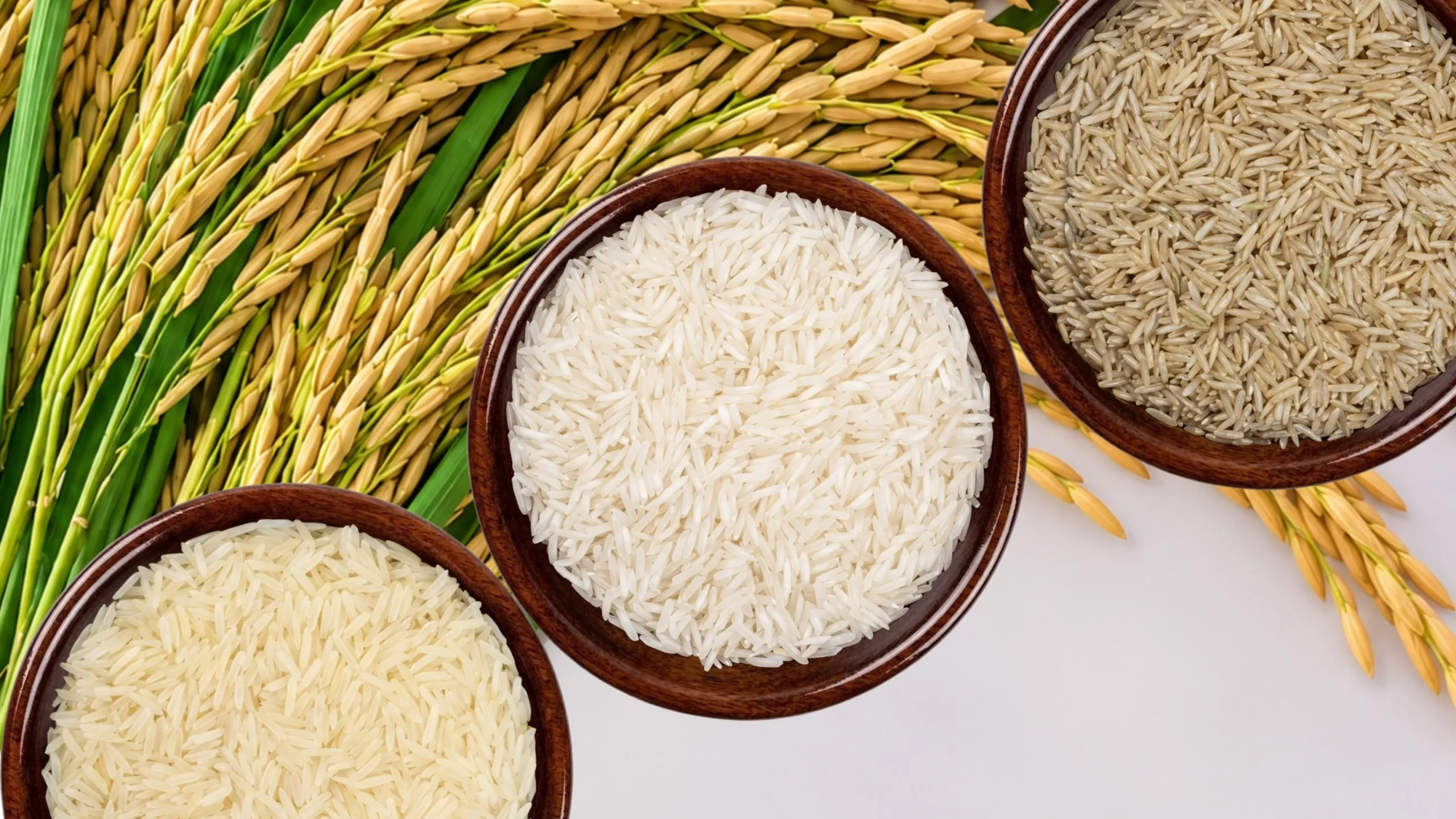
Paddy panicles beside three bowls of Rice at the stages of the Octa-Q process
The Octa-Q process

Eight gates. Every lot passes all of them or it does not ship.

Octa-Q is our name for the Rice milling process we run: eight quality checkpoints between a Punjab paddy field and a sealed container at Karachi Port.
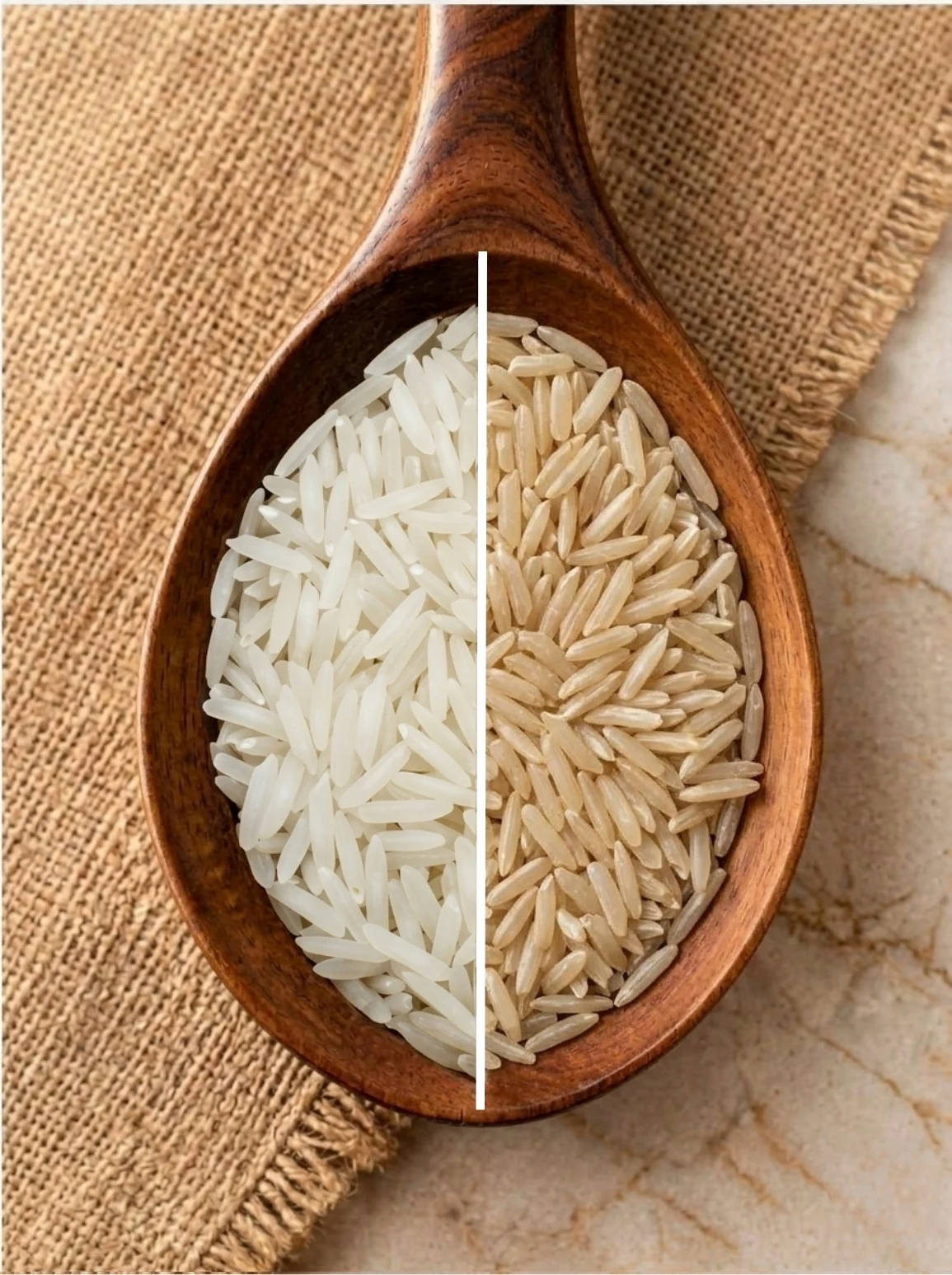
Brown Rice and white Rice side by side on one wooden spoon
Why eight gates

The Rice milling process, stage by stage, with a pass condition on each.

Buyers ask for a dependable Rice miller and exporter in Pakistan. What they are really asking is whether the fortieth container will look like the first. That only happens when every stage has a measurable pass condition and someone accountable for it.

Octa-Q sets those conditions: moisture at intake and in storage, foreign matter after cleaning, broken percentage after grading, colour defects after sorting, fill weight at bagging. The laboratory records each one against the lot number that ends up printed on your bags.
The crop year

Rice is a Kharif crop. The calendar runs the mill.

Planting falls in June and July with the monsoon. Harvest starts in September and runs through November, staggered by variety. Milling and ageing carry the grain through the rest of the year, so the process never really stops.

Jan
Feb
Mar
Apr
May
Jun
Jul
Aug
Sep
Oct
Nov
Dec
Sowing and transplanting Growing Harvest, staggered by variety Drying, storage, milling and ageing continue year-round
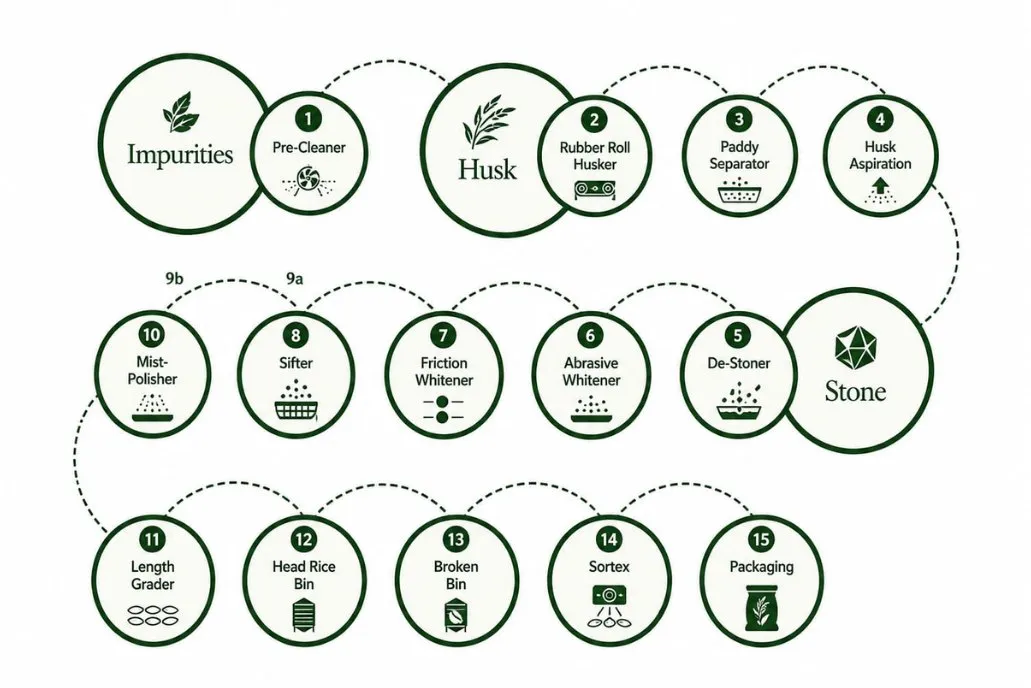
The Rice milling line drawn in order, from pre cleaner and husker through whitening, grading and colour sorting to packing
The milling line

Every machine between the husk and the bag.

Paddy enters at the pre cleaner and leaves as graded, sorted Rice. Impurities, husk and stone come out along the way, and the head Rice and the brokens are separated before anything is packed.
The eight gates

From paddy to pack.

Each gate in the process has a pass condition. A lot that fails one does not move on to the next.

01

Cultivation and harvesting

Rice is a Kharif crop, so planting, growing and harvesting all sit inside the monsoon season. Planting runs June to July, harvest from September through November. Varieties ripen at different speeds, so harvest is staggered and paddy arrives across the whole window.

02

Paddy selection

Paddy quality decides Rice quality, so selection is where we are strictest. Every consignment is judged on grain quality, yield potential and resistance to pest and disease damage. Choosing well here is what keeps losses down and output even.

03

Paddy cleaning and drying

On arrival, dirt, stones and other foreign matter come out and immature grain is discarded. Dryers then bring moisture down to a level that is safe for storage, in stages, so the grain does not crack under the heat.

04

Milling and warehousing

The outer husk is removed to reveal brown Rice, still wearing its bran layers. It then goes into storage that holds moisture and temperature steady, where the Rice ages and the flavour and aroma develop before final milling.

05

Rice pre cleaning

A final inspection before finishing. Anything the first pass missed, a stone, a thread, a fragment of husk, is taken out before the Rice reaches the polishers.

06

Polishing

The Rice is polished to a smooth, even surface. Two different polishers are used depending on the finish the destination market expects, from a light touch to a full mist polish.

07

Grading

Length and thickness grading separates broken and shrivelled grains from head Rice, to the percentage the contract states. This is what makes a 2 percent broken lot actually 2 percent.

08

Colour sorting

Optical sorters look at every grain and eject the discoloured, chalky and damaged ones, along with any remaining foreign material. What comes out the other side is what goes in the bag.

On the line

The Rice milling process: fifteen stations, in order.

The flow every lot follows once it enters the mill. Numbers 9a and 9b are the two polishing routes, chosen by the finish the market expects.

01

Pre cleaner

Impurities out before anything else moves.

02

Rubber roll husker

Husk removed from the paddy.

03

Paddy separator

Brown Rice split from unhusked paddy.

04

Husk aspiration

Husk drawn off the flow.

05

De-stoner

Stones removed on bulk density.

06

Abrasive whitener

First bran removal, gentle on the grain.

07

Friction whitener

Milling degree set to the contract.

08

Sifter

Bran and fines screened out.

09

Mist polisher

Water polish for shine and shelf life.

10

Length grader

Head Rice separated from broken.

11

Head Rice bin

Whole grain held for blending.

12

Broken bin

Broken graded by size, not swept aside.

13

Blending

Broken percentage set as contracted.

14

Sortex

Optical sorting, grain by grain.

15

Packaging

Computerised scales, 1 kg to 50 kg.

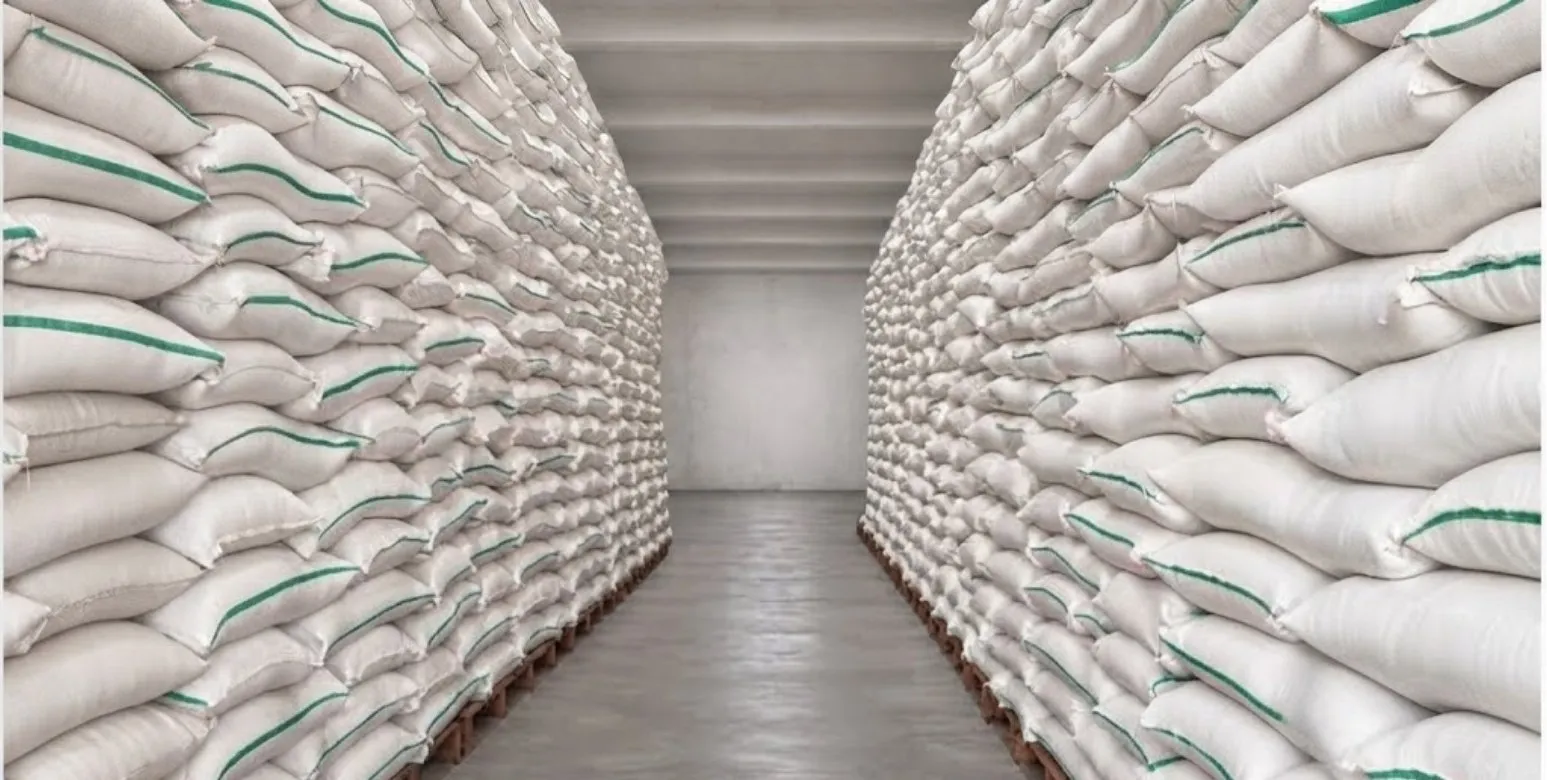
Woven PP Rice bags stacked on both sides of the warehouse aisle
Packing and dispatch

Weighed by machine, checked by hand, stuffed at the factory.

Grades and terminology follow the international definitions buyers work from, published by the Codex Alimentarius.

Packing is the last step of the process. Automatic packing units fill bulk bags from 30 to 50 kg and consumer packs at 1, 2, 5, 10, 20 and 25 kg. Fill weights are set on computerised bagging scales so every bag in a run carries the same weight.

Bags are printed to your artwork where you have a brand. Containers are stuffed at the mill or in Karachi, then moved to Karachi Port for customs clearance and loading.