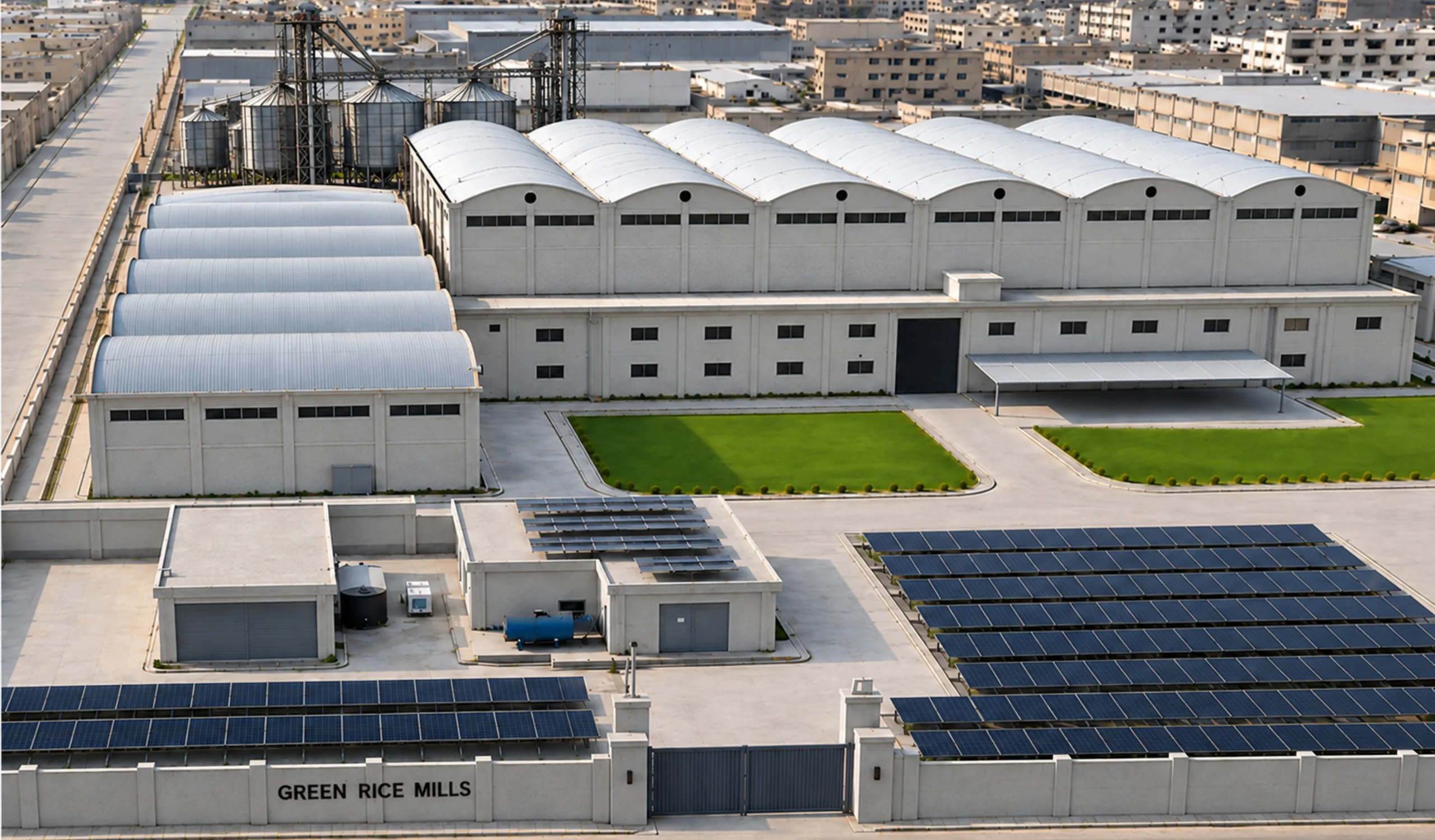
Our infrastructure gives each Rice mill one job. One unit in the Punjab Rice bowl runs the parboiling line, two in Karachi process brown Rice and Rice to Rice. Together they hold 80,000 MT of paddy and move 60 MT an hour.
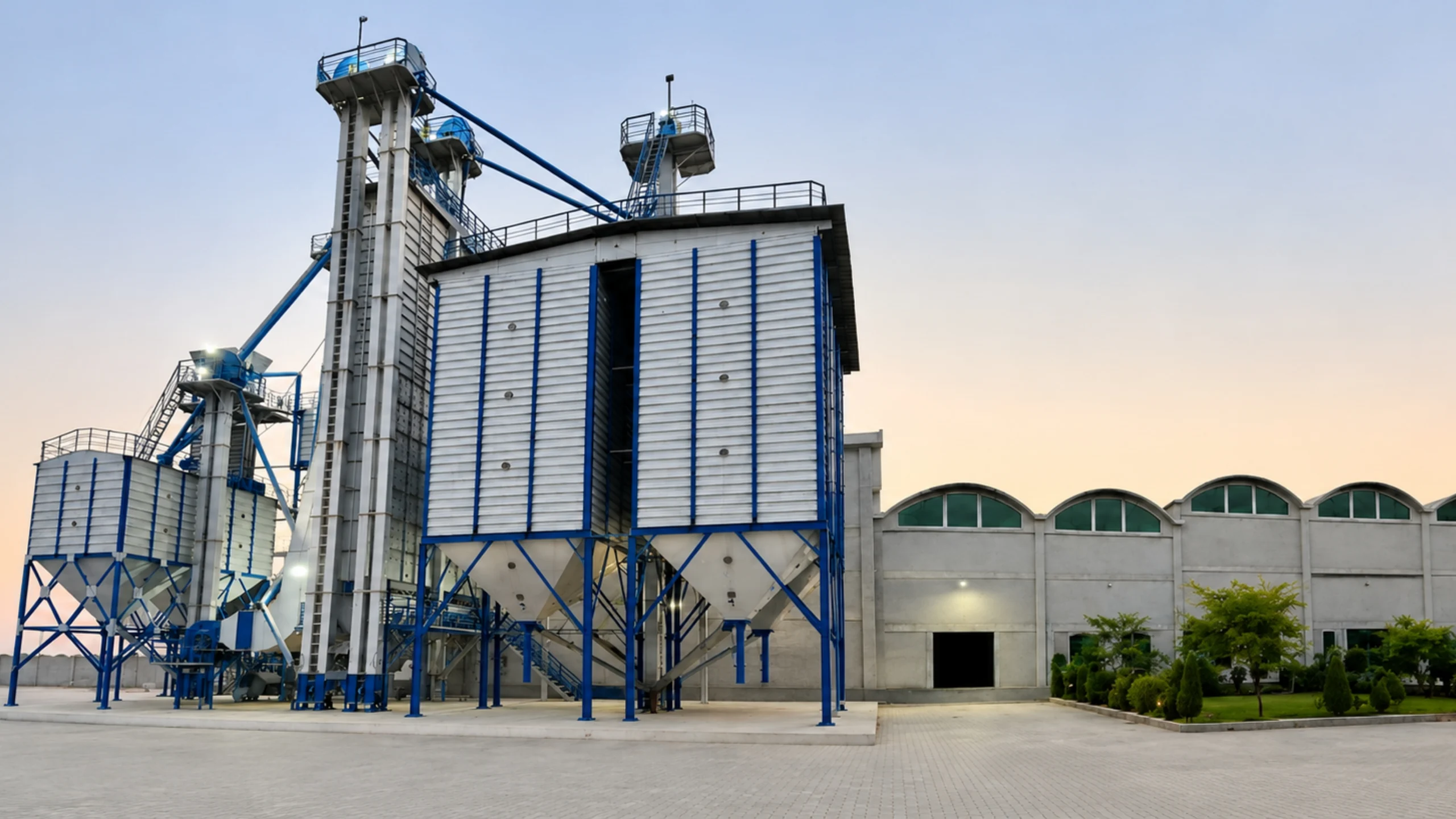
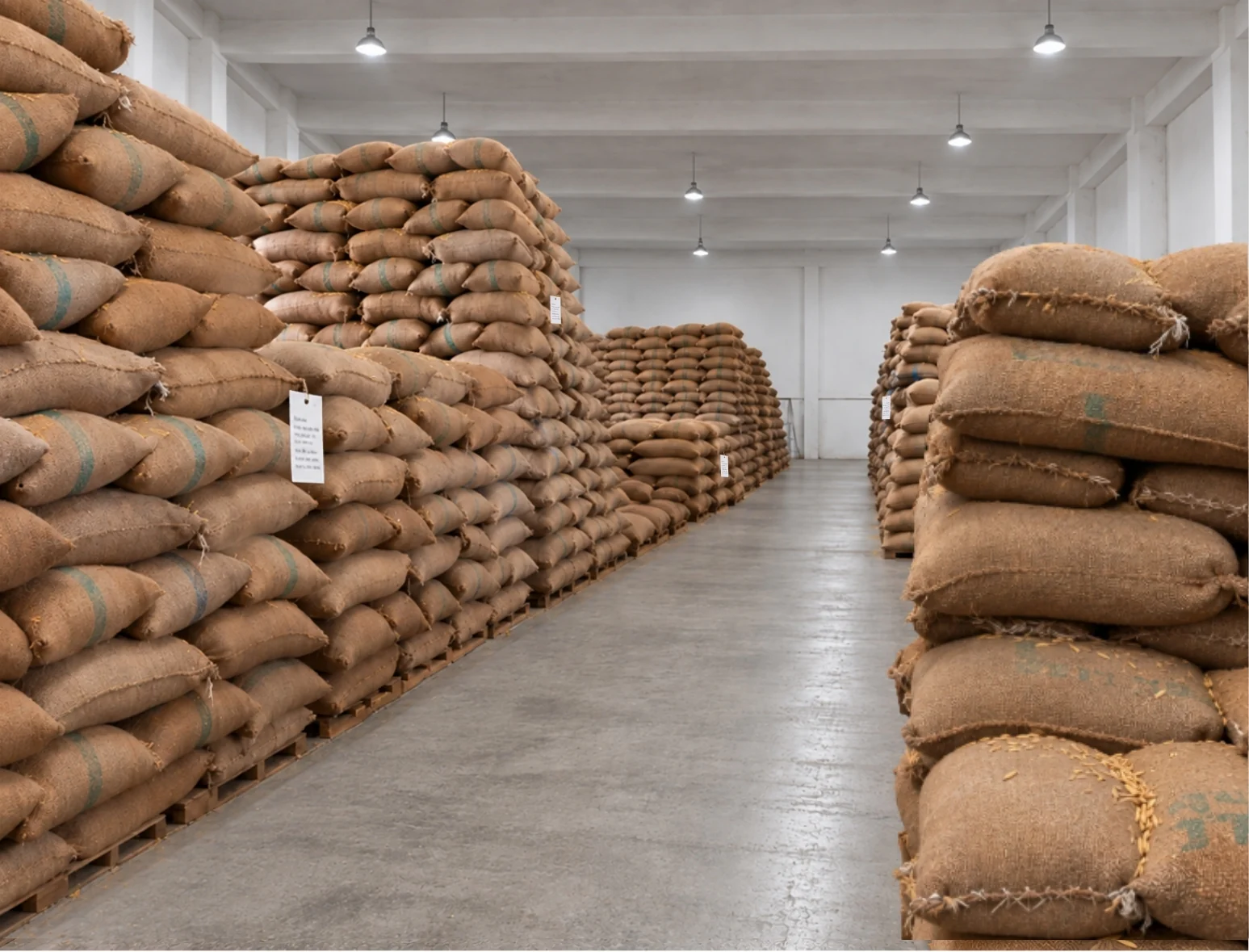
Paddy comes in at the silos, moves through the milling halls and leaves from the warehouses on the same site, which is what keeps a lot together from intake to container.
Buffer and Kennedy American silos in our facilities hold paddy under controlled temperature and humidity. That is what lets Rice age properly rather than simply sitting: moisture equalises, the grain firms up, and the aroma develops before the husk ever comes off.
Drying capacity runs to 800 MT. Paddy arrives above safe moisture at harvest, so the first job is to bring it down in stages. Fast drying alone cracks grain and costs whole Rice yield at the mill.
Splitting the work by process rather than by variety is what keeps each line tuned and each output consistent.
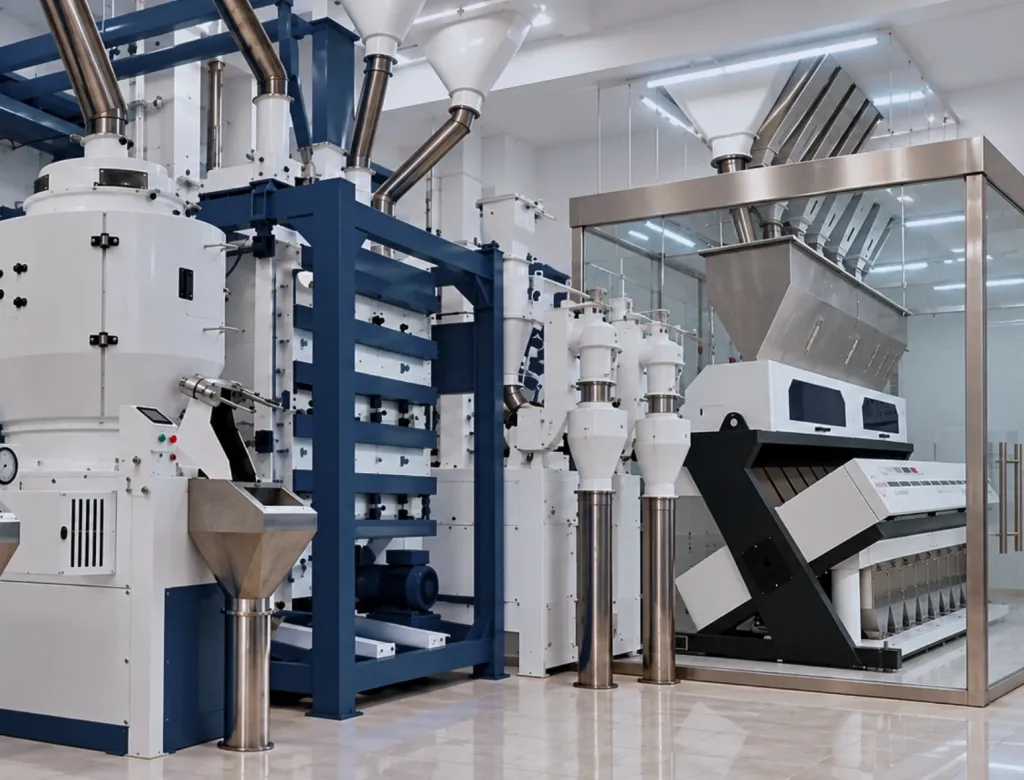
The full parboiled line: pre cleaning, soaking, steaming, two stage drying, cooling, husking, separating, milling, grading, polishing, colour sorting and packing.
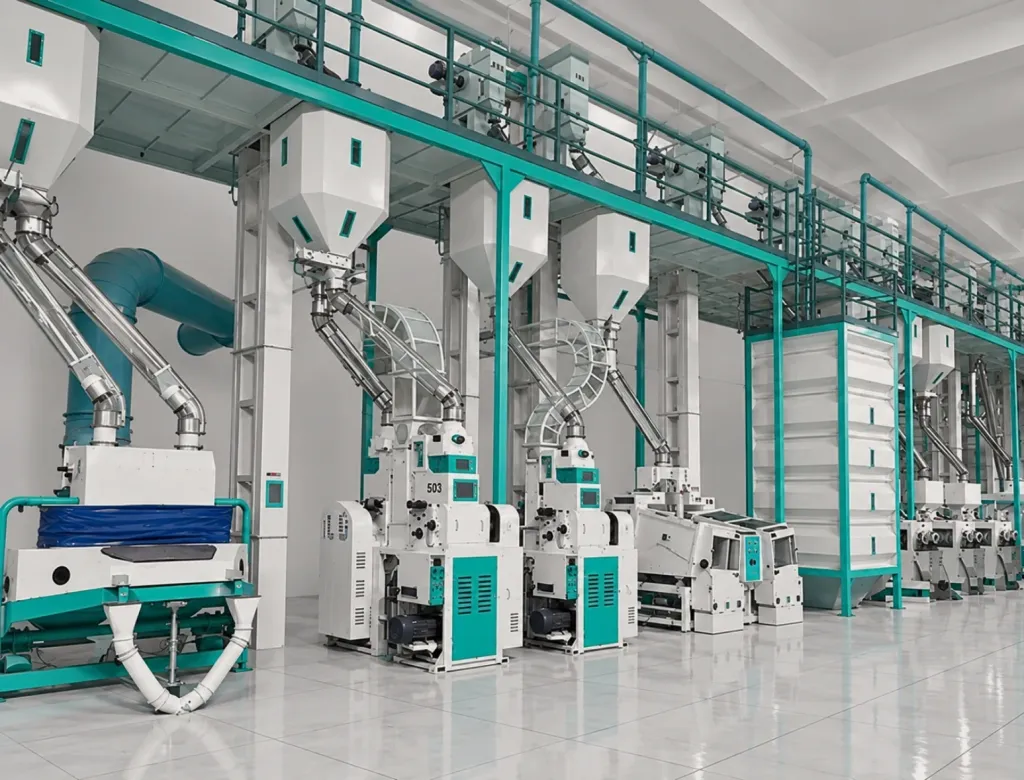
A 300 tons per day plant that takes brown Rice through to finished export grade in a single pass, with multiple water polishers and colour sorters on the line.
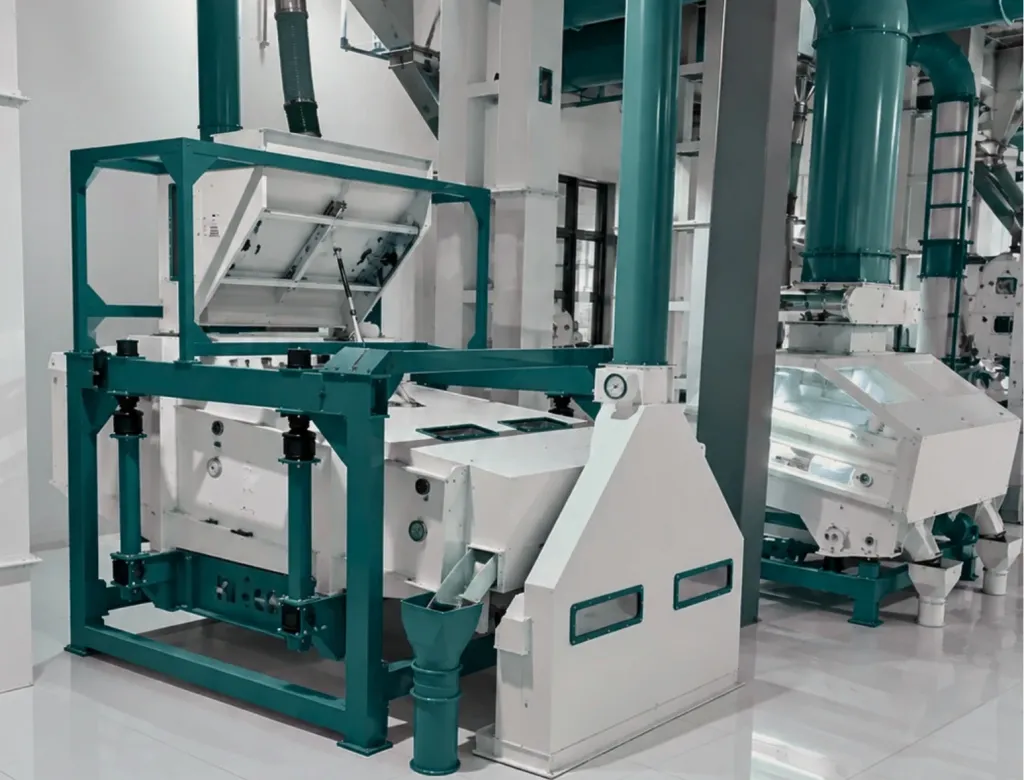
A 250 tons per day white Rice plant. Long and short grain, white and parboiled, blended to the broken percentage a contract specifies before grading and packing.
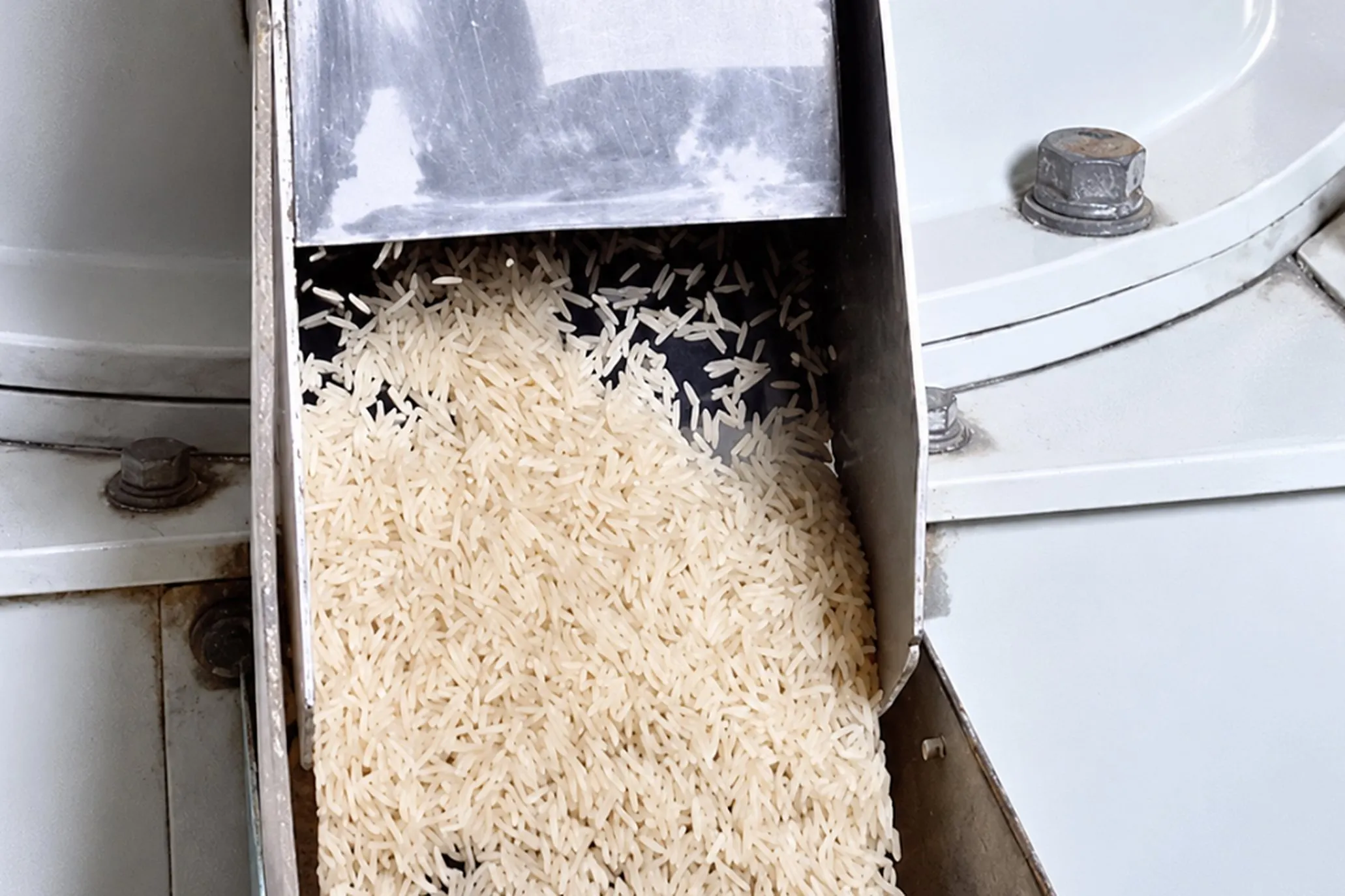
Numbers like 80,000 MT of paddy silos or 60 MT an hour of processing are only interesting because of what they let a buyer do. Silo capacity means we can hold a season and mill against orders rather than milling everything at harvest and selling whatever is left. Processing speed means a container booked for a sailing can be packed for that sailing.
Drying capacity of 800 MT matters most in a wet harvest. Paddy that arrives above safe moisture has to come down in stages within hours, not days, or it cracks and the whole grain yield falls. A mill without drying headroom either turns paddy away or accepts the loss.
All three facilities feed the same laboratory standard and the same grading rules, so a lot milled in Karachi and a lot milled in Punjab meet the same contract.
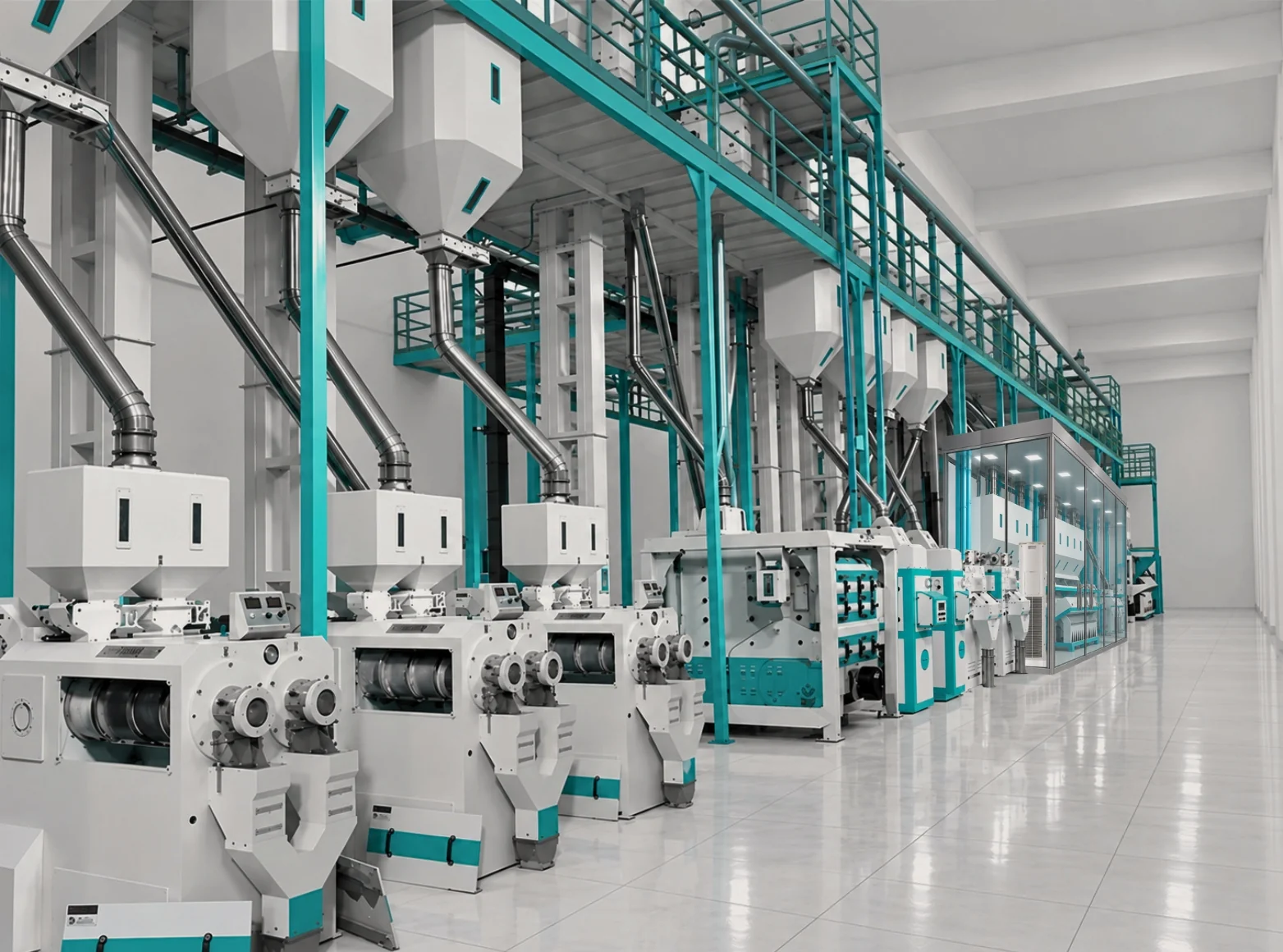
Nothing here is unusual for a modern mill. What matters is that all of it sits under one roof, so a lot never leaves our control to be finished somewhere else.
All three facilities ship through Karachi Port, which is what keeps our inland leg short and our sailing options open. See the Karachi Port Trust for terminal and berth information.
The cleaner grades by size and pulls dust through an aspiration system. The destoner works on bulk density. The separator splits paddy from brown Rice on specific gravity and friction. Vertical whiteners take the bran off to a set degree with minimal breakage.
After that it is finishing: mist polishing for shine and shelf life, length grading into head Rice and broken bins, CCD colour sorting to pull chalky, milky and discoloured kernels, then computerised bagging.